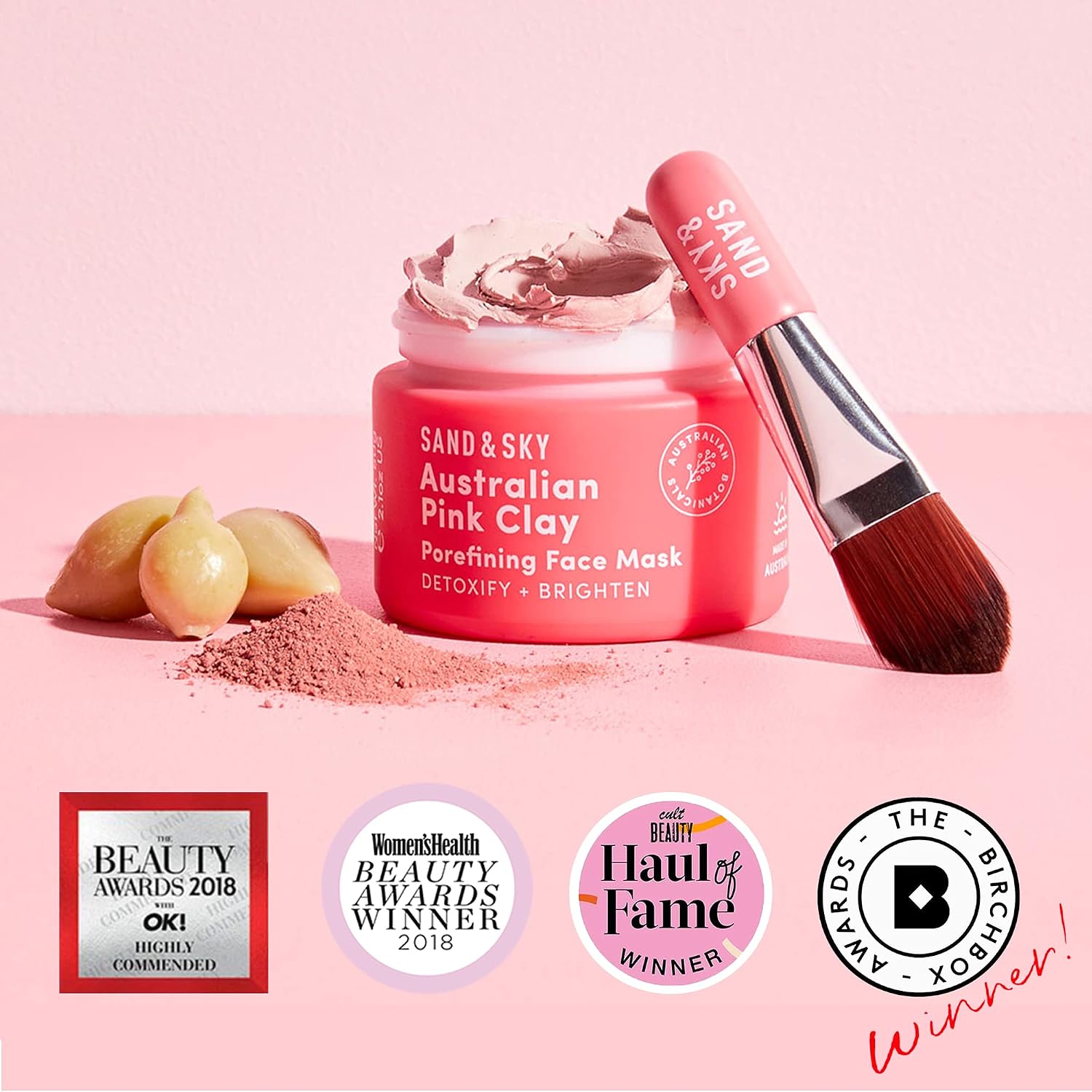
A clay mask is exactly what it sounds like: a product you spread across your face, let dry or sit for a set period, then rinse off — and the core ingredient is a naturally occurring mineral clay that draws excess oil and impurities out of your pores while it sits. Drugstore versions like Aztec Secret Indian Healing Clay (around $10) and Freeman Feeling Beautiful (around $5) have built genuine cult followings because that basic mechanism works. But walk one shelf over — or one page deeper into your browser — and the price climbs fast. 111SKIN’s Celestial Black Diamond Lifting Mask runs roughly $185. OSEA Malibu Mud Mask is $58. Glamglow Supermud lands at $69. The question every thoughtful buyer eventually reaches: is that price gap formulation, or is it marketing? This article breaks down the cost-per-use math, the ingredient differences that actually matter, and the decision framework that tells you which tier is worth it for your situation.
The Cost-Per-Use Math (And Why It Reframes Everything)
“Cost per use” means taking the total price of a product and dividing it by how many uses you’ll realistically get out of it. It’s the same logic that makes a $300 winter coat better value than a $60 coat you replace every season — applied to skincare.
Here’s where clay masks sit in practice:
By the numbers — typical cost-per-use across tiers
| Product | Price | Oz / ml | Approx. uses* | Cost per use |
|---|---|---|---|---|
| Aztec Secret Indian Healing Clay | ~$10 | 454 g | 90–100 | ~$0.10 |
| Freeman Feeling Beautiful | ~$5 | 150 ml | 25–30 | ~$0.18 |
| Origins Clear Improvement | ~$30 | 100 ml | 20–25 | ~$1.30 |
| OSEA Malibu Mud Mask | ~$58 | 100 ml | 20–25 | ~$2.50 |
| Glamglow Supermud | ~$69 | 100 ml | 20–25 | ~$2.95 |
| 111SKIN Black Diamond Lifting Mask | ~$185 | 75 ml | 15–18 | ~$11–12 |
*Assumes one use = 1–2 teaspoons applied to face and neck, once or twice per week.
The math is clarifying, but it isn’t the whole answer. A $0.10-per-use product that strips your barrier and sends you chasing corrective serums isn’t cheap — and a $12-per-use product that genuinely replaces a monthly facial has different math entirely. What you need is the formulation story underneath the numbers.
What You’re Actually Paying For: Formulation Layers That Move the Needle
Not all clay is equal, and prestige brands typically differentiate across three levers. Understanding these levers tells you whether you’re buying real performance or just beautiful packaging.
1. Clay type and sourcing specificity
Cosmetics & Toiletries’ coverage of mineral clay formulation identifies the major players: kaolin (the mildest, suitable for sensitive and dry skin), bentonite (highly absorptive, best for oily and congested skin), illite/French green clay (moderate absorption, trace mineral content), and rhassoul clay (volcanic origin, high mineral density, smoother texture). INCIDecoder’s ingredient-function breakdowns confirm that these clays behave meaningfully differently in formulation — kaolin won’t deliver the same deep-draw as bentonite, and rhassoul sits in between while adding a slip that makes it easier on the barrier.
Drugstore products typically use kaolin or bentonite in isolation. Mid-tier and prestige products more often blend clay types, sometimes combining a high-absorption base clay with a gentler secondary clay to modulate aggression. OSEA’s Malibu Mud Mask, for example, leans on deep-sea minerals and kelp alongside its clay base — an approach that reviewers at Byrdie note translates to a noticeably less tight, less stripped feeling post-rinse compared to straight bentonite formulations. Whether that’s worth the premium is a real question; whether it’s a formulation difference and not a marketing story is not.
2. Active and supporting ingredient stack
This is where prestige formulations most clearly separate from mass-market. Past the clay base, you’re looking at what else is doing work in the formula. Paula’s Choice Expert Advice distinguishes between “clay masks that absorb” and “treatment masks that absorb and deliver” — the latter category layers in actives (salicylic acid, niacinamide, AHAs, antioxidant complexes) that continue working even after the clay has done its draw.
Glamglow Supermud is a usable example: its formula combines activated charcoal with multiple acids (salicylic, lactic, tartaric, citric) alongside the clay base. What owners consistently report across aggregated reviews is that it behaves more like a targeted treatment than a simple mask — addressing blackheads and texture in a way that pure-clay options don’t replicate. The 111SKIN formulation at the highest tier layers in peptides and diamond powder (a mild physical exfoliant), which positions the product closer to a lifting treatment than a pore mask. Whether your skin’s primary need is absorption, treatment, or lifting determines which stack is relevant to you.
3. Delivery system and excipient quality
This is the layer buyers least often discuss and brands least often explain clearly. “Excipients” are the carrier ingredients — the humectants, emollients, and preservative systems that hold the formula together and determine how the actives behave on skin. A well-designed excipient system keeps the clay from over-drying while it works; a poorly designed one gives you that tight, cracked-mask feeling that the Healthline overview of clay masks flags as a warning sign for barrier disruption.
EWG Skin Deep database ratings are one proxy here: scanning ingredient lists for high-concern preservatives or fragrance compounds tells you something about formulation intent, even if it doesn’t tell you everything. Prestige brands targeting sensitive-skin or professional-channel buyers tend to invest more in the excipient layer than mass-market brands where the price ceiling forces corners. That investment is real — it’s just not visible until you’re reading the INCI list.
Barrier Health: The Hidden Cost of Getting This Wrong
There’s a number that matters more than cost-per-use for frequent mask users, and it’s frequency of use. Paula’s Choice Expert Advice recommends most clay masks no more than once or twice per week for normal-to-oily skin, and once per week or less for combination and dry skin. Healthline’s guidance on clay masks echoes this, specifically calling out over-masking as a driver of transepidermal water loss — which is the technical way of saying your skin starts losing moisture faster than it should, leaving it reactive, tight, and paradoxically more prone to oil overproduction as it compensates.
The relevance to cost-per-use is direct: if a more aggressive, lower-pH drugstore formula sends your skin into barrier-repair mode, you may reach for it more often (chasing the result) while simultaneously spending on corrective products. A gentler prestige formula used appropriately may produce a cleaner, more sustainable outcome at a higher per-use cost but a lower total outlay. This is not a universal argument for spending more — it’s an argument for matching formulation aggression to your skin’s tolerance, then doing the math from there.
For estheticians and treatment-room buyers, this calculation runs differently still. A professional-use format like Ahava or Premier’s Dead Sea mineral collections ($60–$200+) in larger SKUs brings the per-use cost down substantially while delivering mineral-dense formulations that work across a client range. Byrdie reviewers and spa professionals reviewing multi-use formats consistently flag the Dead Sea mineral category as particularly effective for dehydrated and mature skin types — the mineral concentration, particularly magnesium and potassium, supports barrier function rather than challenging it.
The Upgrade Path Decision Framework
If you’re sitting with a decision about where to invest — whether you’re moving from drugstore to mid-tier, mid-tier to prestige, or building out a professional treatment menu — here’s the decision structure that actually resolves checkout deadlock.
If your primary concern is absorption and deep pore clearing on oily, congested skin: The case for Aztec Secret Indian Healing Clay or a bentonite-based mid-tier option remains strong. The raw absorption capacity of a high-quality bentonite formula is difficult for prestige brands to meaningfully outperform — what they offer instead is a gentler delivery system and additional actives. If those actives aren’t your priority, you’re paying for elegance, not function. The cost-per-use math strongly favors the lower tier here.
If your concern is oily and textured skin with visible blackheads or early congestion: The mid-tier multi-acid treatment mask category — Glamglow Supermud, Origins Clear Improvement — earns its price premium because it combines absorption with active exfoliation. Reviewers at Byrdie and across aggregated product ratings consistently distinguish this category’s results from pure-clay masks. The $1.30–$3 per-use range represents real formulation value here, not just marketing.
If your concern is anti-aging, lifting, barrier support, or complex/mature skin: This is where prestige formulations — 111SKIN, Eminence Organics Stone Crop Masque, OSEA Malibu Mud Mask — justify the premium most clearly. The active stacks and excipient quality in this tier are doing work the lower tiers aren’t designed to do. The $2.50–$12 per-use range is harder to absorb emotionally, but if you’re comparing it against the cost of a monthly facial (typically $80–$150 in a mid-market urban spa as of mid-2026), a prestige at-home mask used weekly has favorable cost-per-treatment math.
If you’re sourcing for a professional treatment room: Prioritize mineral concentration, skin-type range, and format size. Professional Dead Sea collections from Ahava and Premier offer validated mineral provenance — the Dead Sea’s documented mineral profile is consistently cited in dermatology-adjacent literature as genuinely differentiated from inland clay sources — and the larger formats bring unit economics into professional viability. The cost-per-use math on a professional-size SKU typically runs $1–$3 per client application, which fits comfortably inside a facial treatment’s retail margin.
The Honest Summary
The prestige clay mask category is not a monolith of marketing. There are real formulation differences at each price tier — in clay type, active stack, and excipient quality — and some of those differences map directly to skin outcomes that consumers and professionals consistently report. The cost-per-use math doesn’t automatically favor the cheapest option once you account for frequency, barrier health, and treatment equivalency.
But the math also doesn’t automatically justify the top tier for every buyer. The clearest signal is your skin’s primary concern: absorption favors lower-tier formulations; multi-active treatment favors mid-tier; lifting, barrier support, and mature skin favor prestige. Match the formulation to the need, then run the numbers — and you’ll find the answer is less about price and more about fit.
Ready to find your tier? Use the SkinMud comparison tool to stack your top contenders side by side — ingredients, cost per use, and skin-type fit all in one view.