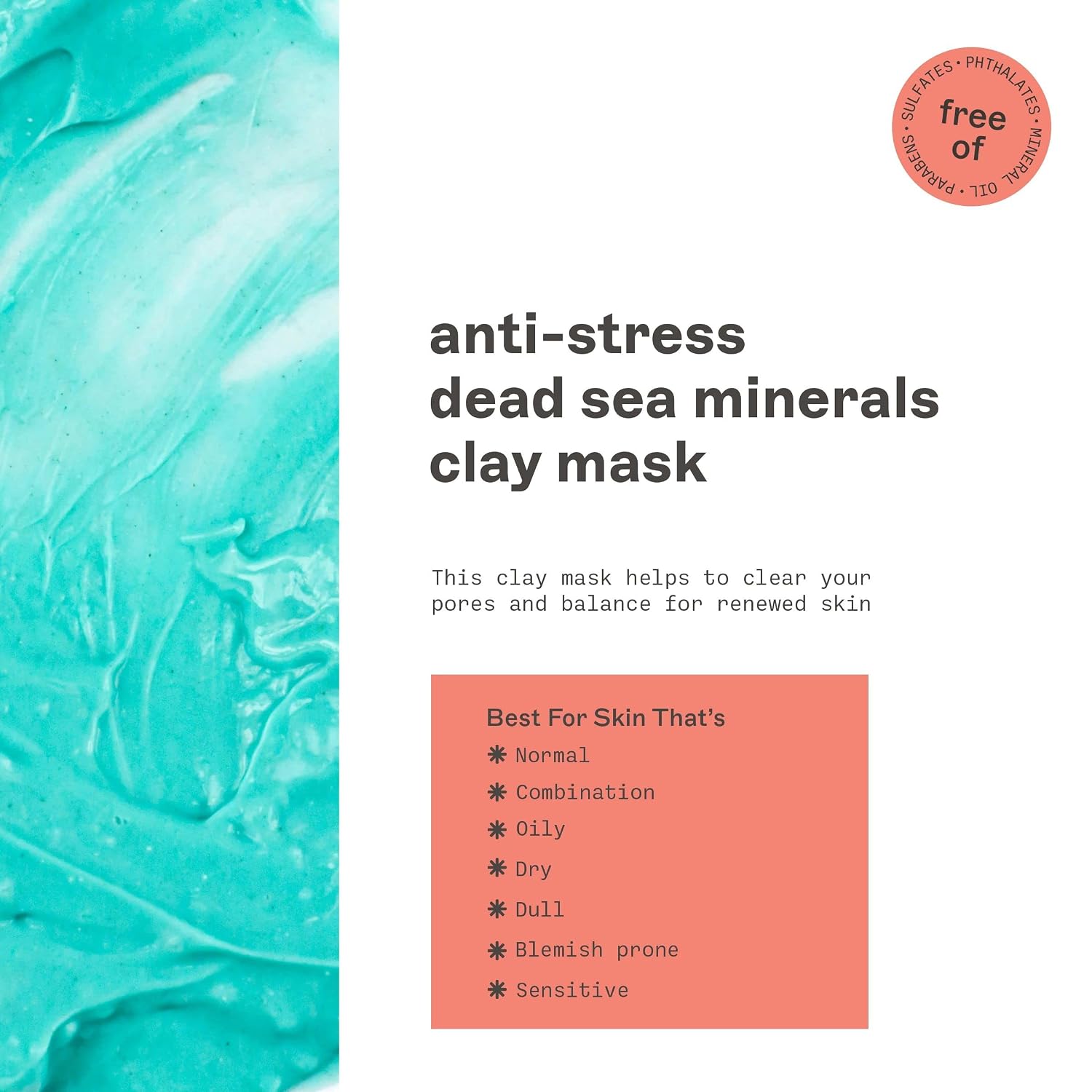
You’ve probably used a clay mask before — that thick, earthy paste you spread over your face, let dry until it pulls tight, then rinse off to find your skin looking a little clearer and feeling a little smoother. Clay masks work by absorbing excess oil and drawing impurities (think: the gunk inside pores) toward the skin’s surface. The active ingredient is literally a type of mineral-rich soil — kaolin, bentonite, or French green clay are the most common — and the quality of that clay, plus everything else the brand adds around it, is what separates a $5 jar from a $69 tube. If you’ve been rotating through drugstore options and wondering whether the prestige versions are genuinely different or just prettier packaging, this guide is for you. We’ll map the upgrade path tier by tier, show you the math on cost-per-use, and give you a clear decision rule at the end.
What You’re Actually Comparing at Each Price Point
Before we compare specific products, it helps to understand the three levers that change as you move up the price ladder: clay type and sourcing, supporting ingredients, and formulation texture.
Clay type and sourcing is the foundation. Kaolin is the mildest clay — it absorbs oil without stripping moisture, which is why Paula’s Choice Expert Advice notes it as the preferred choice for dry and sensitive skin types alongside oilier ones. Bentonite is more aggressive: it carries a negative ionic charge that attracts positively charged toxins and oils, making it better suited to oily or congested skin. Per INCI Decoder’s ingredient analysis, bentonite (often listed as sodium bentonite or calcium bentonite) swells significantly when wet, which is what gives it that powerful drawing action. Prestige brands often source specific regional clays — Amazonian, Dead Sea, or Glacier — and the mineral profile genuinely varies by geography. Whether that variation produces measurably different results on skin is a real question, and we’ll address it honestly.
Supporting ingredients are where the price gap earns its keep most clearly. A $5 Freeman mask is built around functional clay plus basic emollients. A $30 Origins Clear Improvement or a $69 Glamglow Supermud adds a secondary active layer — activated charcoal, glycolic acid, salicylic acid, or peptide complexes — that the clay carries deeper into the pore environment. Healthline’s overview of bentonite clay notes that clay on its own is a passive absorber; pairing it with chemical exfoliants or antimicrobial actives is what turns a basic mask into a targeted treatment.
Texture and rinse-ability matter more than they sound. Reviewers at Byrdie consistently flag that premium formulas tend to rinse cleaner, sit more comfortably during wear, and feel less like sandpaper on removal — attributes that translate directly into barrier safety if you mask regularly.
The Tier Breakdown: Budget, Mid, and Prestige
Budget Tier ($5–$15): Freeman and Queen Helene
Freeman Feeling Beautiful Facial Clay Mask (roughly $5 for 6 oz) and Queen Helene Mint Julep Masque (roughly $5–$8 for 8 oz) are the canonical entry points. Both lead with kaolin, with Queen Helene adding sulfur and magnesium aluminum silicate — a combination that reviewers at Allure have noted is particularly effective for active breakouts but can be drying with overuse.
What they do well: High clay concentration per dollar. Queen Helene’s sulfur content has a genuine antimicrobial effect on C. acnes (the bacteria associated with breakouts), per EWG Skin Deep’s ingredient ratings. For oily or acne-prone skin on a tight budget, there is real performance here.
Where they stop short: Formulations are minimal by design. The supporting cast is basically preservatives and fragrance. No secondary actives, limited humectants (ingredients that draw water into the skin, like glycerin or hyaluronic acid), and — based on aggregated owner reviews — a tendency to over-dry if left on longer than the label recommends. Byrdie’s roundup of clay mask comparisons notes that budget formulas most commonly draw complaints about tightness and flaking post-rinse, which is a signal of transient barrier disruption.
Cost-per-use math: At $5 for roughly 30–40 uses (a standard pea-to-dime amount per session), you’re at roughly $0.13–$0.17 per use.
Mid-Tier ($25–$69): Origins Clear Improvement and Glamglow Supermud
This is where the formulation gap becomes concrete.
Origins Clear Improvement Active Charcoal Mask (~$30 for 2.5 oz) pairs white China clay with activated charcoal — a porous carbon form that dramatically increases surface area for oil and debris absorption — plus lecithin to help the formula bind to oils. Published formulation notes confirm the inclusion of bamboo charcoal, which INCI Decoder rates as a functional pore-cleansing active rather than a cosmetic add. Owners consistently report visible pore reduction in before/after comparisons, with less post-mask dryness than comparable single-clay formulas.
Glamglow Supermud Clearing Treatment (~$69 for 1.7 oz) is the most technically layered formula in this tier. It combines six different acid and clay actives: kaolin, volcanic ash (a silica-rich natural abrasive), glycolic acid (a chemical exfoliant that loosens dead skin cell bonds), salicylic acid (a beta-hydroxy acid that penetrates oil-filled pores specifically), plus eucalyptus and charcoal. Reviewers at Byrdie and Allure both flag Supermud as one of the few masks where users report visible extraction-style results — not because anything is physically extracted, but because the combination of BHA and clay creates conditions where congestion loosens on its own after a single session. The trade-off named explicitly in reviews: that active acid stack makes it unsuitable for sensitive or dry skin types without buffer steps.
Cost-per-use math:
| Product | Price | Est. Uses | Cost/Use |
|---|---|---|---|
| Freeman Clay Mask | $5 / 6 oz | ~35 | ~$0.14 |
| Origins Clear Improvement | $30 / 2.5 oz | ~25 | ~$1.20 |
| Glamglow Supermud | $69 / 1.7 oz | ~20 | ~$3.45 |
The jump from $0.14 to $1.20 is real — but Origins is being used differently. Where Freeman is a weekly maintenance step, Origins and Glamglow are targeted treatments: most users report masking once every 7–14 days rather than twice weekly, which compresses the cost gap in practice.
The Ingredient Sourcing Question (And When It Actually Matters)
Prestige brands lean hard on provenance storytelling — “mineral-rich Amazonian white clay,” “volcanic ash from the Pacific Ring,” “Dead Sea sediment harvested at 1,400 feet below sea level.” Is any of this meaningful?
Partially yes, partially marketing. Paula’s Choice Expert Advice notes that regional mineral variations in clay do affect ion exchange capacity — the technical measure of how efficiently a clay absorbs oils and charged impurities — but the differences are modest and rarely tested comparatively in published literature. What sourcing claims more reliably signal is quality control: a brand that knows and publicizes its clay origin is more likely to be working with consistent, tested raw material than one that lists a generic INCI name with no further detail.
EWG Skin Deep’s ratings are useful here as a cross-check. A formula with high-provenance clay but a supporting cast full of potentially irritating fragrance compounds or comedogenic (pore-clogging) emollients is still a net-mixed proposition. Reading the full ingredient list, not just the hero clay, is the practitioner habit that separates smart upgrades from expensive disappointments.
How to Decide: The “If X, Then Y” Upgrade Rules
Here’s where we resolve the checkout decision. These aren’t vague recommendations — they’re explicit decision rules based on what reviewers, ingredient analysts, and formulation disclosures actually tell us.
If your primary concern is oil control on a tight budget: Stay at the drugstore tier. Queen Helene Mint Julep is a genuinely functional product for oily and acne-prone skin. Upgrade when the results plateau or your skin type shifts.
If you’re experiencing persistent congestion (clogged pores that don’t respond to weekly masking): The Origins Clear Improvement is the logical first upgrade. The activated charcoal addition is a real formulation step up, the price-per-use is under $1.50, and aggregated owner reviews show it consistently performing for exactly this complaint without the irritation risk of acid-loaded formulas.
If you have oily, resilient skin with both congestion and visible texture concerns: Glamglow Supermud is the defensible prestige choice. The BHA-plus-clay combination addresses both concerns in one step, and at a once-weekly cadence the $3.45 per use is comparable to a single pharmacy skincare item. The non-negotiable condition: your skin must be tolerant of acids. Reviewers with dry, sensitized, or compromised skin barriers consistently report irritation.
If you’re a spa or esthetics professional sourcing for treatment rooms: The calculus shifts entirely. Per-unit cost matters less than formulation consistency, professional SKU availability, and your client mix’s skin-type spread. Origins and Glamglow are both accessible through professional channels, but the Glamglow acid stack requires consultation gatekeeping before application on reactive or compromised skin. A kaolin-forward mid-tier formula with documented sensitivity testing is often the safer default for mixed-clientele rooms.
On barrier health and frequency: This bears emphasis regardless of which tier you choose. Paula’s Choice Expert Advice and Healthline’s bentonite overview both flag that clay masks — especially bentonite formulas — should not be used more than 1–2 times weekly on oily skin, and no more than once weekly on normal-to-dry skin. Over-masking strips the lipid layer that keeps moisture in, and the resulting dryness can paradoxically trigger more oil production. More expensive masks are not safer to use more frequently; the barrier risk is a function of clay activity level, not price.
The Bottom Line
The upgrade path from Freeman and Queen Helene to Origins and Glamglow is not a leap — it’s a logical progression driven by what your skin actually needs. Budget clay masks are real products with real results for oil control and breakouts. The prestige tier earns its price by stacking clinically active secondaries — charcoal, BHA, glycolic acid — on top of the clay foundation, which shifts the mask from a maintenance step to a targeted treatment. The cost-per-use gap is smaller in practice than it looks on the shelf, especially when you factor in reduced frequency.
If you’re ready to map your specific skin type against the full range of clay and mud masks at every price point — including the prestige Dead Sea mineral and professional-grade options beyond Glamglow — use the SkinMud comparison tool to run a side-by-side that accounts for your skin type, masking frequency, and budget ceiling. It’s the fastest way to stop second-guessing and start seeing results.