If you’ve ever picked up a jar of Aztec Secret Indian Healing Clay or spotted a plain white powder labeled “kaolin” at a beauty supply store, you’ve already brushed up against the DIY clay mask world. Clay masks work by physically drawing excess oil, debris, and some surface-level impurities out of pores while they dry — a process that has genuine, documented skin-clearing benefits when used correctly. The two workhorses of this category are kaolin (a fine, soft white clay, sometimes called China clay) and bentonite (a volcanic ash-derived clay that swells significantly when it contacts liquid and has a stronger drawing action). Both come as loose powders you mix yourself, which makes them dramatically cheaper per use than pre-mixed formulas — but they are not interchangeable. This guide breaks down the cost math, maps each clay to the skin types and treatment goals where it actually wins, and gives you a clear, irritant-free mixing framework so you’re not guessing at your treatment table or bathroom counter.
The Cost-Per-Use Math: Why Powder Wins (And Which Powder Wins More)
Let’s run the numbers first, because this is where the DIY case either closes or falls apart.
A well-regarded prestige pre-mixed clay mask — think GlamGlow Supermud at roughly $69 for 100g — delivers about 10–15 single-use applications at a standard one-tablespoon portion. That puts you at $4.60–$6.90 per use. Origins Clear Improvement at ~$30 for 75ml lands in the $2.00–$3.00 per use range. Both are defensible purchases for the ritual experience, the brand’s supporting actives (charcoal, salicylic acid, etc.), and the convenience of grab-and-go texture.
Raw clay powder flips the math entirely:
| Product | Price (2026 avg.) | Yield (tbsp) | Cost per use | Tier |
|---|---|---|---|---|
| Kaolin powder, 1 lb / ~450g | ~$8–$12 | ~85 tbsp | $0.09–$0.14 | Pure — $7.49 |
| Bentonite powder, 1 lb / ~450g | ~$8–$14 | ~85 tbsp | $0.09–$0.16 | Pure — $7.49 |
| Origins Clear Improvement, 75ml | ~$30 | ~10 tbsp | $3.00 | Molivera — $14.95 |
| GlamGlow Supermud, 100g | ~$69 | ~12 tbsp | $5.75 | Bare — $26.99 |
By the numbers:
- 1 lb of kaolin at $10 yields approximately 85 single-tablespoon masks → ~$0.12/use
- 1 lb of bentonite at $12 yields approximately 85 masks → ~$0.14/use
- GlamGlow Supermud: approximately $5.75/use
- Savings over 50 uses (kaolin vs. Supermud): roughly $280
The per-use case for powder is overwhelming. The honest caveat: powder is an input, not a finished product. You’re trading formulation labor, mixing vessels, and ingredient sourcing for those savings. For a home enthusiast doing one mask per week, that trade is trivial. For an esthetician doing eight clients a day, that trade is a business decision worth taking seriously — and the math only gets more compelling at volume.
Kaolin vs. Bentonite: Naming the Tradeoffs Explicitly
This is the decision that actually matters. Formulators and skin care editors consistently describe these two clays as sitting at opposite ends of a gentleness-to-intensity spectrum. Cosmetics & Toiletries, in their overview of functional clays in cosmetic formulations, characterizes kaolin and bentonite as occupying distinct absorption-capacity tiers — a distinction that maps directly onto real-world skin outcomes.
Kaolin: The Low-Drama Option
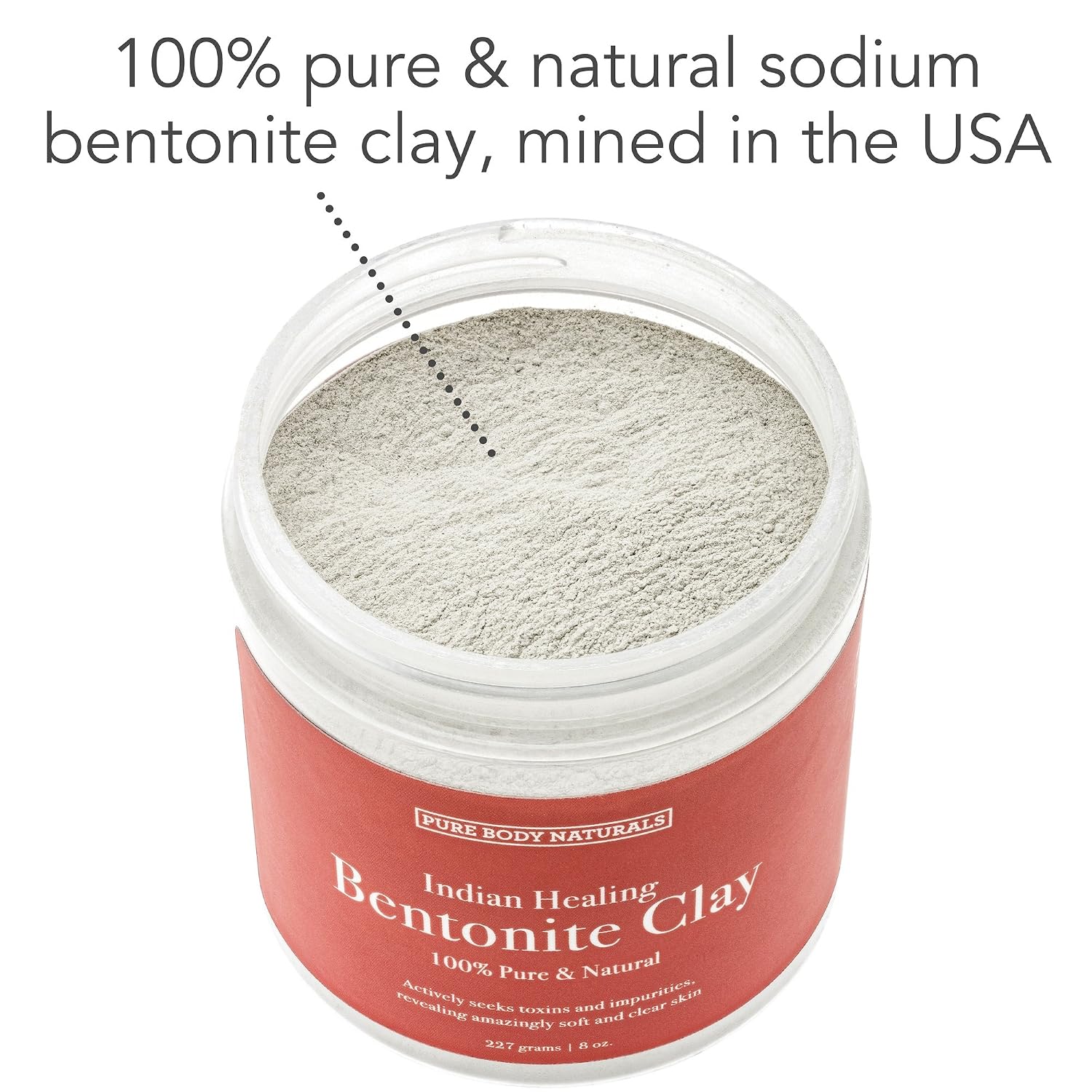
Pure
$7.49
In stock on Amazon
Check price on AmazonKaolin has a very fine particle structure and a relatively low absorption capacity compared to bentonite. It lifts surface oil and mild impurities without aggressively pulling moisture from the skin. Paula’s Choice Expert Advice, in their published guidance on clay and mud masks, consistently recommends kaolin-based masks as the appropriate choice for dry, sensitive, and combination skin types. It is also the base clay in most commercially formulated “gentle” masks precisely because it tolerates a wider range of added actives without causing irritation.
Where kaolin wins:
- Sensitive or reactive skin (rosacea-adjacent, post-treatment, compromised barrier)
- Dry or dehydrated skin types that still want the detox ritual without tightness
- Clients new to masking who need a tolerance-building starting point
- Formulations where you’re adding additional actives (acids, botanicals) and need the clay to stay neutral
Where kaolin falls short:
- Oily or acne-prone skin that genuinely needs deep pore clearing — kaolin’s absorption capacity isn’t strong enough to do the heavy lifting here
- Blackhead-focused treatments where stronger drawing action is the goal
Bentonite: The High-Draw Option
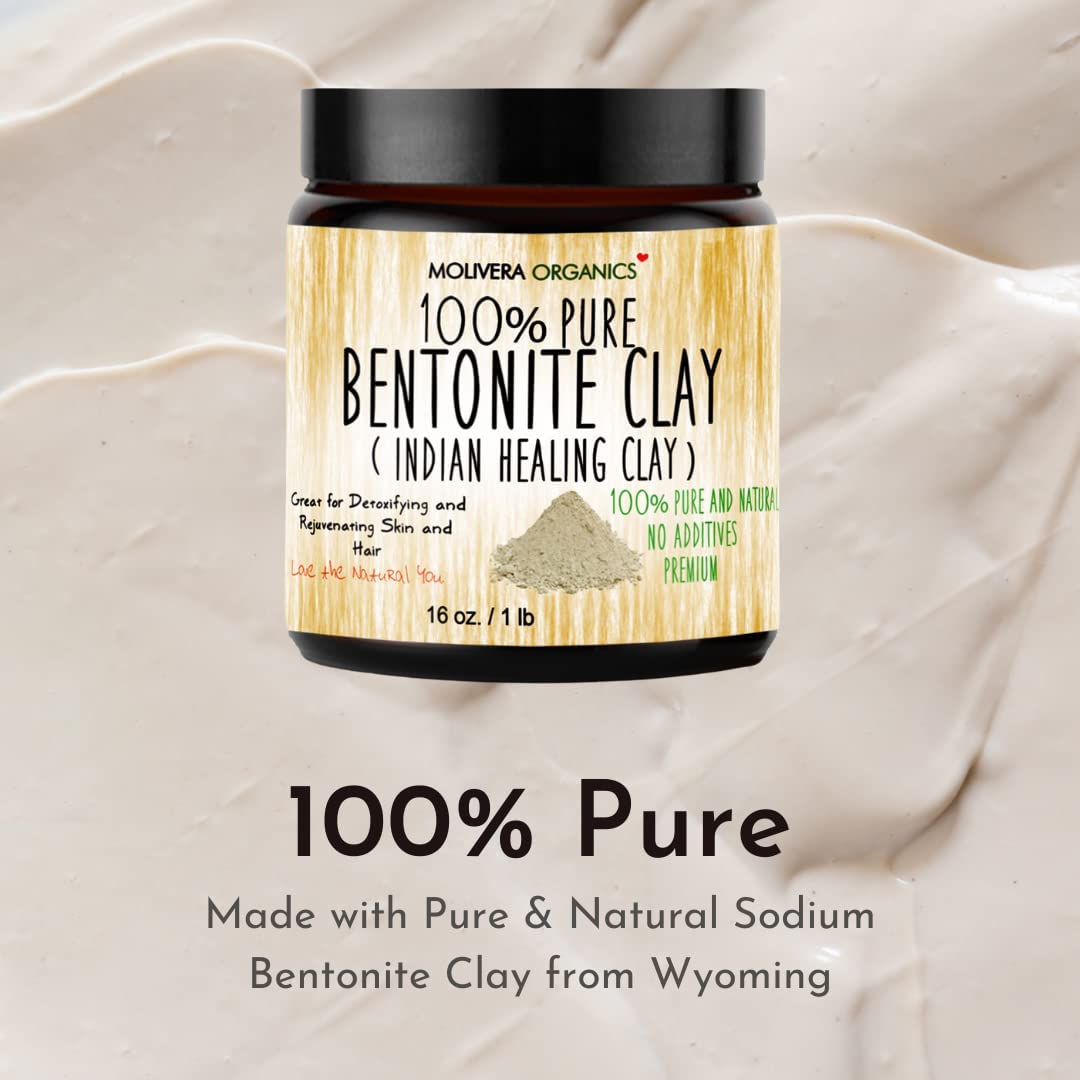
Molivera
$14.95
In stock on Amazon
Check price on AmazonBentonite is a swelling clay — when it contacts water or liquid, it expands and takes on a strong negative ionic charge that pulls positively charged sebum and surface debris toward it. This is the mechanism behind Aztec Secret’s cult following among oily-skin devotees. Healthline, in their consumer overview of bentonite clay benefits and risks, notes that this same drawing action is what makes it effective and what makes it potentially irritating: left on too long, or used on already-dry or sensitive skin, bentonite can disrupt the skin barrier rather than support it.
Where bentonite wins:
- Oily, congested, or acne-prone skin
- Blackhead and large-pore treatments
- Clients who report that gentler masks “don’t do anything”
- Spot-treatment use applied to blemishes only, not the whole face
Where bentonite falls short:
- Dry, sensitive, or compromised skin — the risk of over-drying and barrier disruption is well-documented across dermatologist sources including Byrdie’s roundup of expert-recommended clay masks
- Extended leave-on treatments; bentonite should be removed while still slightly damp, not after it has fully cracked and hardened
- Combination skin where the T-zone and cheeks have genuinely different needs (a kaolin-dominant blend with a small bentonite fraction is often the better call here)
Blended Formulations: The Combination-Skin Middle Ground
Molivera
$14.95
In stock on Amazon
Check price on AmazonFor combination or “normal-ish” skin, neither clay in isolation is ideal. A two-part kaolin to one-part bentonite blend gives you the barrier-friendly base of kaolin with just enough bentonite draw to address congestion in oilier zones. This is also the approach that most mid-range prestige masks — Origins Clear Improvement included — use under the hood: a dominant gentle clay carrier with a smaller fraction of a higher-draw clay for efficacy.
The if-then decision rule:
If the skin is oily, congested, or acne-prone → bentonite is your primary clay, used 1–2x/week max. If the skin is dry, sensitive, or reactive → kaolin is your only appropriate starting point. If the skin is combination or “normal-ish” → kaolin dominant (2 parts kaolin : 1 part bentonite) blended with a non-drying liquid.
Irritant-Free Mixing Guide: What Goes In, What Stays Out
This is where DIY clay masking most often goes wrong — not in the clay choice, but in what people add to the mixing bowl. EWG Skin Deep Database rates both kaolin and bentonite as low-hazard ingredients in standard cosmetic concentrations; the irritation risk in DIY formulations almost always comes from amateur additions, not the clay itself.
Choosing Your Mixing Vessel and Liquid
Pure
$7.49
In stock on Amazon
Check price on AmazonBentonite specifically should never be mixed in a metal bowl or with a metal utensil. Cosmetics & Toiletries’ formulation literature notes that bentonite’s ionic activity can be disrupted by contact with metal, potentially compromising the clay’s charge and introducing trace contaminants into the mix. Use glass, ceramic, or food-grade plastic — and a wooden or silicone spatula.
Liquid options, ranked by skin-friendliness:
- Plain water (distilled preferred) — neutral, universally compatible, no added variables. Best starting point for anyone new to DIY.
- Aloe vera gel (pure, no alcohol) — adds a small amount of barrier-soothing benefit; those who report sensitivity to bentonite often find that swapping water for aloe reduces the tightness significantly.
- Rose water — mild, adds sensory appeal; appropriate for all skin types.
- Apple cider vinegar (diluted, max 1 part ACV to 3 parts water) — a common bentonite pairing popular among oily-skin enthusiasts for its pH properties, but contraindicated for sensitive or compromised skin. Do not use undiluted.
What not to add:
- Lemon juice or undiluted citrus oils: citrus is photosensitizing and the limonene concentration in raw lemon juice far exceeds safe topical limits
- Baking soda: raises pH aggressively and disrupts the acid mantle
- Hydrogen peroxide: causes oxidizing damage to barrier cells
- Honey as the only liquid with bentonite: the sugar concentration makes thorough rinsing difficult and can contribute to pore congestion in oily skin types
Ratio Guide for a Standard Single-Use Mask
Pure
$7.49
In stock on Amazon
Check price on Amazon- 1 tablespoon clay powder (kaolin, bentonite, or blend per your skin-type decision above)
- 1–2 teaspoons liquid — start with 1, add slowly until you reach a yogurt-like consistency, not pourable
- Optional: 1–2 drops facial oil (squalane, jojoba) only when using bentonite on combination skin — this blunts the harshest of the drawing action on drier areas
Mix immediately before use. Do not make clay masks in bulk and store them; hydrated clay is a hospitable environment for microbial growth, and without professional-grade preservatives, a pre-made batch is a contamination risk.
Frequency, Timing, and the Barrier Health Guardrail
The single most common mistake documented across expert clay mask guidance — Byrdie’s dermatologist-sourced coverage of the best clay masks surfaces this repeatedly — is over-use. Clay masks, particularly bentonite, are not daily treatments. They are periodic interventions.
Maximum recommended frequency by skin type:
- Oily/acne-prone with bentonite: 2x per week, 10–12 minutes per session, removed while still slightly damp
- Combination with kaolin-dominant blend: 1–2x per week, 12–15 minutes
- Dry or sensitive with kaolin: 1x per week, 10 minutes maximum, always followed immediately by a moisturizer or barrier-repair serum
If skin feels tight, itchy, or looks flaky the day after masking, that is a barrier signal. Drop frequency, switch to kaolin-only, and follow every masking session with a ceramide or squalane-based moisturizer. Paula’s Choice Expert Advice specifically flags over-masking as one of the fastest routes to a compromised skin barrier — the explicit goal is a cleaner surface, not stripped skin.
The Upgrade Path: When DIY Stops Being the Right Answer
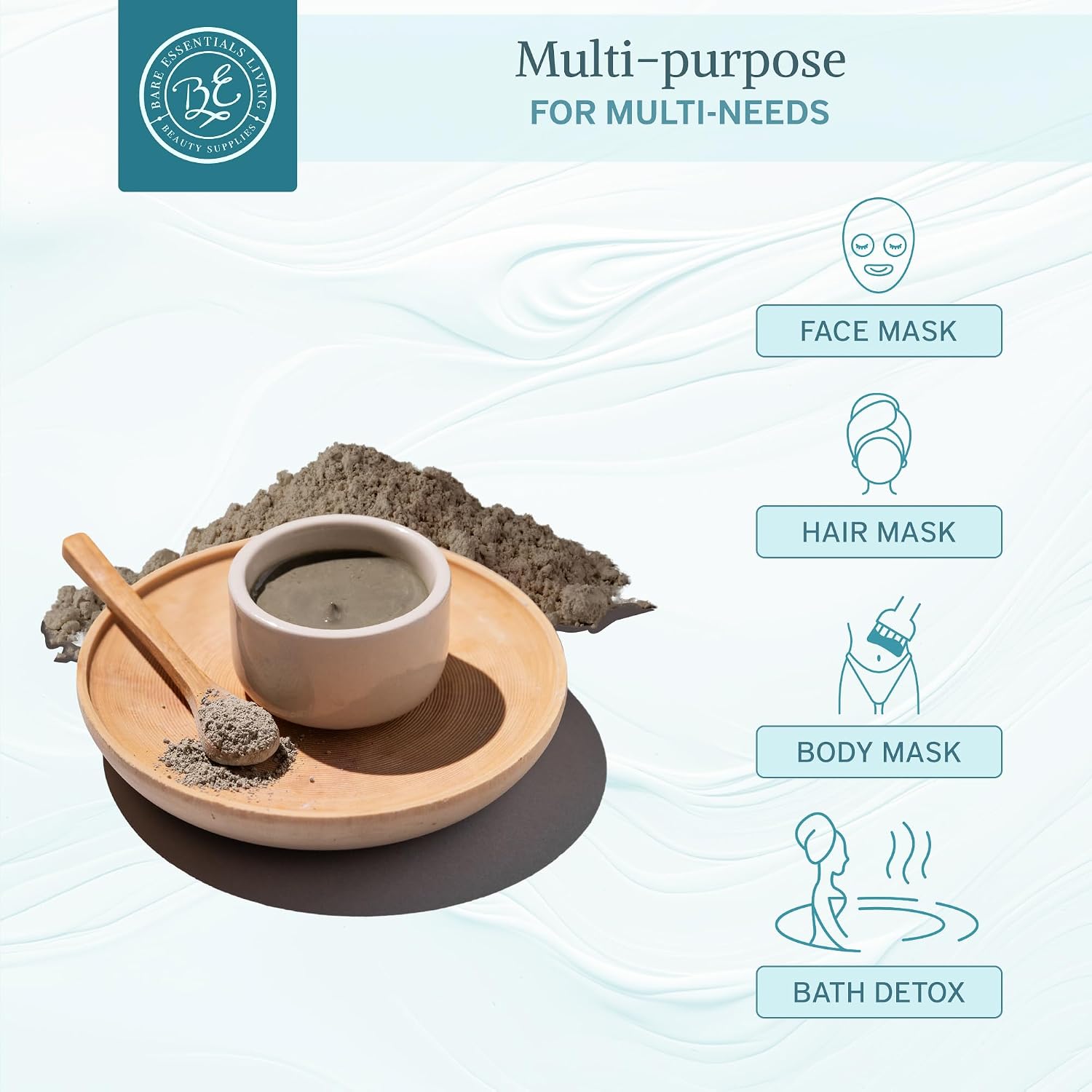
Bare
$26.99
In stock on Amazon
Check price on AmazonDIY clay powder is an excellent cost optimizer and a useful tool for building ingredient literacy, but there are situations where a formulated product is the more defensible choice:
- When active-ingredient precision matters: Pre-formulated masks incorporate stabilized actives at calibrated concentrations. Replicating that stability in a home kitchen is not realistic, and Allure’s coverage of dermatologist-recommended mask formulations consistently notes that the delivery system matters as much as the ingredient itself.
- When you’re treating a diagnosed skin condition: Acne, rosacea, or eczema-adjacent presentations warrant a dermatologist-guided protocol, not a DIY optimization.
- When client liability is in play: Estheticians mixing custom blends in a treatment room should verify their state’s scope-of-practice rules; using a professionally formulated product keeps liability in a much cleaner lane.
For everyone else — the enthusiast building a routine, the practitioner doing intake assessments, the buyer trying to understand what they’re actually paying for in a $69 jar — understanding the kaolin-vs-bentonite tradeoff at the powder level is foundational. It’s the ingredient literacy that makes every future label you read make more sense.
Ready to run your own cost comparison or match a clay type to a specific skin concern? Use the SkinMud comparison tool to stack DIY powder options against pre-formulated masks side by side — or browse the clay mask buying guide to shop the formulated winners if DIY isn’t the right fit for your routine right now.