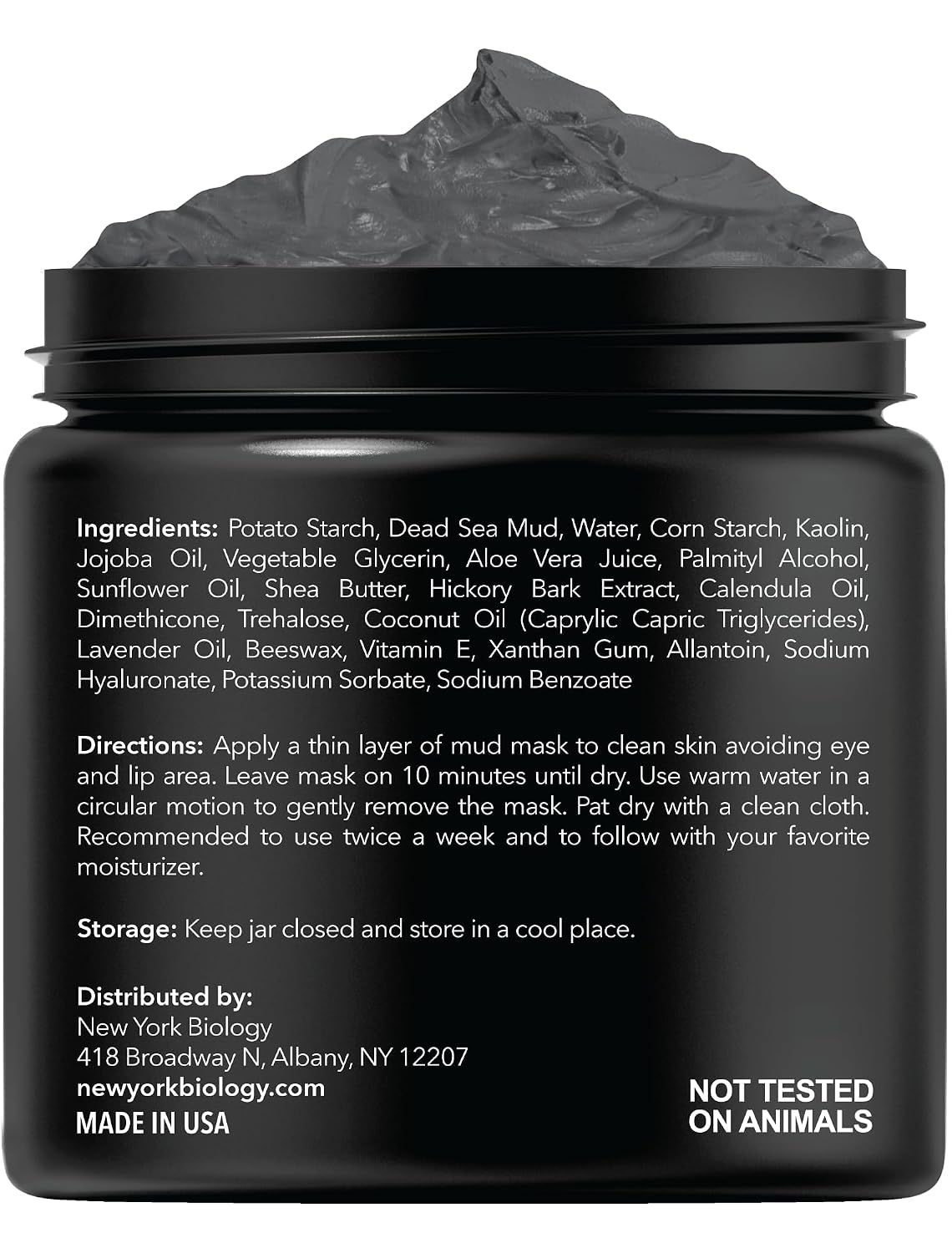
Dead Sea mud is exactly what it sounds like — sediment harvested from the floor of the Dead Sea, a saltwater lake sitting at the lowest point on Earth, straddling the border of Israel and Jordan. Because the lake has no outlet and loses water only through evaporation, its waters concentrate minerals over millennia: magnesium, potassium, calcium, and bromide at levels far higher than ordinary ocean water. When formulators incorporate that mud into a face mask, the pitch is that those minerals absorb into skin, draw out impurities, and calm inflammation more effectively than standard kaolin (white clay) or bentonite (a volcanic ash clay) masks can. Whether that pitch holds up depends heavily on which mud, in what concentration, combined with what else — and that’s exactly what this guide is here to sort out. If you’re an esthetician building a treatment menu, a spa buyer comparing SKUs, or an enthusiast deciding whether to step up from a drugstore clay to a prestige Dead Sea formula, the mineral-provenance and cost-per-use math below will sharpen your decision.
| EDITOR'S PICK[New York Biology Dead Sea Mud M](https://www.amazon.com/dp/B01NCM25K7?tag=greenflower20-20)… | Mid-tierNew York Biology Dead Sea Mud M… | Budget pick[Majestic Pure Dead Sea Mud Mask](https://www.amazon.com/dp/B00UREAGU8?tag=greenflower20-20)… | |
|---|---|---|---|
| Size | 4 oz | 8.8 oz | 8.8 oz |
| Actives | Stem cell, Col. | — | — |
| Target skin | Oily | Oily | Acne, blackhd |
| For face & body | ✓ | ✓ | — |
| Claims tightening | ✓ | ✓ | — |
| Price | $19.99 | $16.95 | $12.95 |
| See on Amazon → | See on Amazon → | See on Amazon → |
Why Mineral Provenance Actually Changes the Product
The phrase “Dead Sea minerals” appears on labels ranging from a $9 drugstore pouch to a $200 professional-grade jar. That range isn’t just margin — it often reflects meaningfully different source material and processing.
Where the mud comes from matters. The Dead Sea’s northern basin (primarily controlled by Israeli and Jordanian operations) is the commercial harvesting zone. Brands like Ahava and Premier source directly from this region and publish mineral-assay data. Ahava’s technical documentation, for example, specifies that their Osmoter complex is derived from concentrated Dead Sea water with a documented magnesium-to-sodium ratio that differs from ordinary sea salts. That level of traceability is the benchmark to hold other brands against.
Lower-cost products frequently list “Dead Sea salt” or “Dead Sea mineral complex” as one of many mid-list ingredients, which per Cosmetics and Toiletries’ analysis of mineral-rich clay formulations, can signal a diluted extract rather than whole mud — meaning you’re getting the branding benefit more than the mineral payload. This isn’t automatically dishonest; a diluted extract in the right vehicle can still deliver measurable results. But it’s a different product, and pricing it comparably to whole-mud concentrations is where the value story gets murky.
Magnesium is the workhorse. Healthline’s overview of Dead Sea mineral benefits highlights magnesium as the key driver of skin-barrier support and anti-inflammatory activity. Paula’s Choice’s expert advisory on clay and mud masks corroborates this, noting that magnesium-rich formulations show better evidence for calming reactive skin than standard clay masks. When you’re comparing labels, magnesium chloride (or magnesium-rich Dead Sea water/mud listed in the top half of the ingredient deck) is the signal worth tracking — not the marketing copy on the front panel.
Processing affects efficacy. Raw Dead Sea mud is hygroscopic (it pulls moisture from the air) and microbially active — it needs stabilization for retail and spa use. Cold-processing or minimal-heat drying preserves more volatile mineral fractions. Some brands heat-treat extensively for shelf stability, which extends shelf life but may reduce active mineral content. Brands that disclose processing method in their professional-use documentation (Ahava, OSEA, Eminence Organics) earn points here; opacity on this point is itself a data point.
Irritant Flags: What Practitioners Need to Screen
This is the section most buying guides skip, and it’s the one that generates client callbacks.
Dead Sea mud is genuinely high-mineral, high-osmotic material. That’s its mechanism of action. It is also exactly why it can be aggressive on compromised or sensitized skin barriers.
The dehydration paradox. Minerals draw moisture out of skin cells via osmosis before the skin’s barrier can reabsorb what’s useful. Leave-on time is not a style preference — it is a functional parameter. Most clinical-grade protocols and brand instructions specify 10–15 minutes maximum for whole-mud formulas. EWG’s Skin Deep methodology flags extended-contact mineral products for barrier disruption at higher concentrations; reviewers at Byrdie consistently note that over-masking with Dead Sea products correlates with post-mask tightness and flaking, especially on dry or sensitive skin types.
Common co-irritants to screen on the label:
- Fragrance / parfum: Present in a surprising number of mid-tier Dead Sea products. On broken or sensitized skin, fragrance is the first trigger. Paula’s Choice’s expert guidance is unambiguous on this: fragrance in a leave-on or semi-occluded product (mud sits on skin) increases sensitization risk substantially.
- High-concentration salicylic acid + mud: Some “clarifying” Dead Sea masks stack BHA (salicylic acid) on top of the already-exfoliating mineral content. For oily-acne clients this can be appropriate at low BHA percentages (0.5–1%), but reviewers in aggregated Byrdie coverage of this subcategory flag that anything over 1% salicylic in combination with extended mud contact can over-strip.
- Alcohol (denat.) in the top five ingredients: A cost-cutting carrier that accelerates drying. Useful for oily-skin, short-contact applications; problematic for normal-to-dry or rosacea-adjacent clients.
- Essential oils at high concentrations: Eminence Organics’ Stone Crop Masque, popular in clean-beauty treatment rooms, contains botanical extracts that some clients find reactive. OSEA Malibu Mud Mask is comparatively stripped-down on the botanical irritant front. The tradeoff is real — know your client’s sensitivity profile before you default to the “natural” option.
Cost-Per-Use: The Math That Resolves the Checkout Decision
Here’s where the practitioner framing pays off. Price-per-jar is a bad unit. Cost-per-use is the decision variable.
By the numbers:
| Product | Price (approx., May 2026) | Net weight | Recommended use per application | Est. uses per jar | Cost per use |
|---|---|---|---|---|---|
| Aztec Secret Indian Healing Clay | ~$10 | 454 g (1 lb) | ~15–20 g mixed | ~25 | ~$0.40 |
| Freeman Feeling Beautiful | ~$5 | 175 mL | ~10 mL | ~17 | ~$0.29 |
| OSEA Malibu Mud Mask | ~$58 | 100 mL | ~8–10 mL | ~12 | ~$4.83 |
| Ahava Mineral Mud Mask | ~$60 | 100 mL | ~8–10 mL | ~12 | ~$5.00 |
| Eminence Organics Stone Crop Masque | ~$62 | 60 mL | ~5–7 mL | ~10 | ~$6.20 |
| 111SKIN Celestial Black Diamond Lifting Mask | ~$185 | 75 mL | ~6–8 mL | ~10–12 | ~$15–18 |
| Premier Dead Sea Professional Mud Mask | ~$120–$200 | 250–500 mL (pro sizes) | ~15–20 mL | ~15–25 | ~$5–12 |
Application volumes are estimates based on single-face coverage; actual yield varies by application thickness and facial surface area. Pro-size SKUs from Premier and Ahava professional lines shift the cost-per-use math favorably for multi-client treatment rooms.
The Aztec Secret number looks striking, but Aztec Secret is pure calcium bentonite — not Dead Sea mud. It belongs in the comparison only as the baseline clay benchmark, not as a Dead Sea mineral product. Once you strip out that comparison, the genuine Dead Sea options cluster between $4.83 and $18 per use at retail.
For a treatment room running 20 Dead Sea mud facials per month, the difference between an OSEA-tier product ($5/use) and a 111SKIN-tier product ($17/use) is $240/month in product cost alone — before markup. That’s the decision frame. At retail markup of 50–100%, the 111SKIN tier produces stronger per-service revenue to offset cost, but requires the client base willing to support that price point. Mid-tier Dead Sea products (Ahava, OSEA, Eminence) are the volume-service sweet spot for most spa operators.
Upgrade Path Logic: If X, Then Y
This is the section that earns its place in a practitioner guide. Here are the explicit decision rules:
If your primary concern is verified mineral provenance and you’re building a results-focused treatment menu: Choose Ahava or Premier professional lines. Both publish sourcing documentation, both have long track records in clinical spa settings, and both offer pro-size SKUs that improve cost-per-use. Reviewers at Byrdie and Dermstore’s editorial blog consistently position Ahava’s professional-grade Mineral Mud Mask as the provenance-confidence baseline for Dead Sea formulas.
If your clients skew sensitive or rosacea-adjacent: OSEA Malibu Mud Mask is the cleaner-label option with documented Dead Sea mud content and a shorter irritant list than most botanical-heavy alternatives. Confirm no fragrance sensitivity before booking a first treatment.
If you’re a retail enthusiast stepping up from Aztec Secret or a generic kaolin mask: Ahava’s retail-size Mineral Mud Mask or OSEA’s 100 mL jar are the logical next step. The cost-per-use jump from drugstore to this tier feels sharp in the abstract but the formulation difference — in mineral concentration and pH-calibrated delivery — is material according to Cosmetics and Toiletries’ analysis of mineral clay formulation chemistry.
If you’re evaluating 111SKIN Celestial Black Diamond Lifting Mask: This product is positioned as a mineral-plus-lifting treatment, not a standalone mud mask — the diamond powder and peptide complex are doing as much work as the Dead Sea content. It belongs in a different service tier and is best evaluated against other prestige bio-lifting masks rather than against pure Dead Sea mud formulas. The cost-per-use math only works in a high-ticket facial context.
If a client is asking why they should upgrade from a $10 drugstore clay: Frame it this way: standard kaolin and bentonite masks absorb sebum effectively but contribute no active minerals. Dead Sea mud masks absorb sebum AND deliver a documented mineral payload with evidence for barrier support and anti-inflammatory activity, per Healthline’s overview of Dead Sea mineral research. The upgrade is not hype — but only if the product actually contains meaningful whole-mud or mineral-complex content in the top half of the ingredient list.
The Bottom Line
Dead Sea mud masks earn their category premium when three conditions are met: the mud is sourced from a documented Dead Sea harvest zone, it appears as a primary ingredient rather than a trace marketing add-in, and the surrounding formula doesn’t introduce irritants that undercut the mineral benefits. Ahava and Premier deliver on all three at mid-to-professional price points. OSEA delivers on two of three with a cleaner secondary formula. The prestige tier (111SKIN) delivers on provenance but reframes the product as a luxury treatment hybrid rather than a mud mask proper.
For estheticians building a menu, the cost-per-use math strongly favors professional-size SKUs from the Ahava or Premier lines — the per-use cost drops to a range that supports healthy service margins without sacrificing the ingredient story your clients are paying for.
Ready to compare the top Dead Sea mud masks side by side? Use the SkinMud comparison tool to filter by mineral source, irritant profile, skin type, and cost-per-use at your target application volume.