If you’ve ever picked up a clay mask that promised to “clear breakouts” only to wake up with tighter, flakier, more irritated skin than when you started, you already understand the core tension this article is going to resolve. Clay masks work by drawing out excess oil and debris from pores — think of them as a gentle vacuum for your skin. Some formulas stop there. Others layer in acne-fighting actives: salicylic acid (a chemical exfoliant, meaning it dissolves the “glue” that clogs pores) or sulfur (an old-school mineral that kills acne-causing bacteria and slows oil production). The problem is that stacking multiple drying agents in a single product — and using it too frequently — can damage your skin barrier, the protective outer layer that keeps moisture in and irritants out. A compromised barrier leads to redness, peeling, and, ironically, more breakouts. This guide will walk you through which formulas balance these actives intelligently, what the tradeoffs look like by price tier, and how to decide which category is right for your skin right now.
| EDITOR'S PICK[Murad Rapid Relief Acne Sulfur…](https://www.amazon.com/dp/B0C78KMTNG?tag=greenflower20-20) | Mid-tierTONYMOLY I'm Rice Clarifying Bl… | Budget pick[The Ordinary Salicylic Acid 2%…](https://www.amazon.com/dp/B07SZ9PTLP?tag=greenflower20-20) | |
|---|---|---|---|
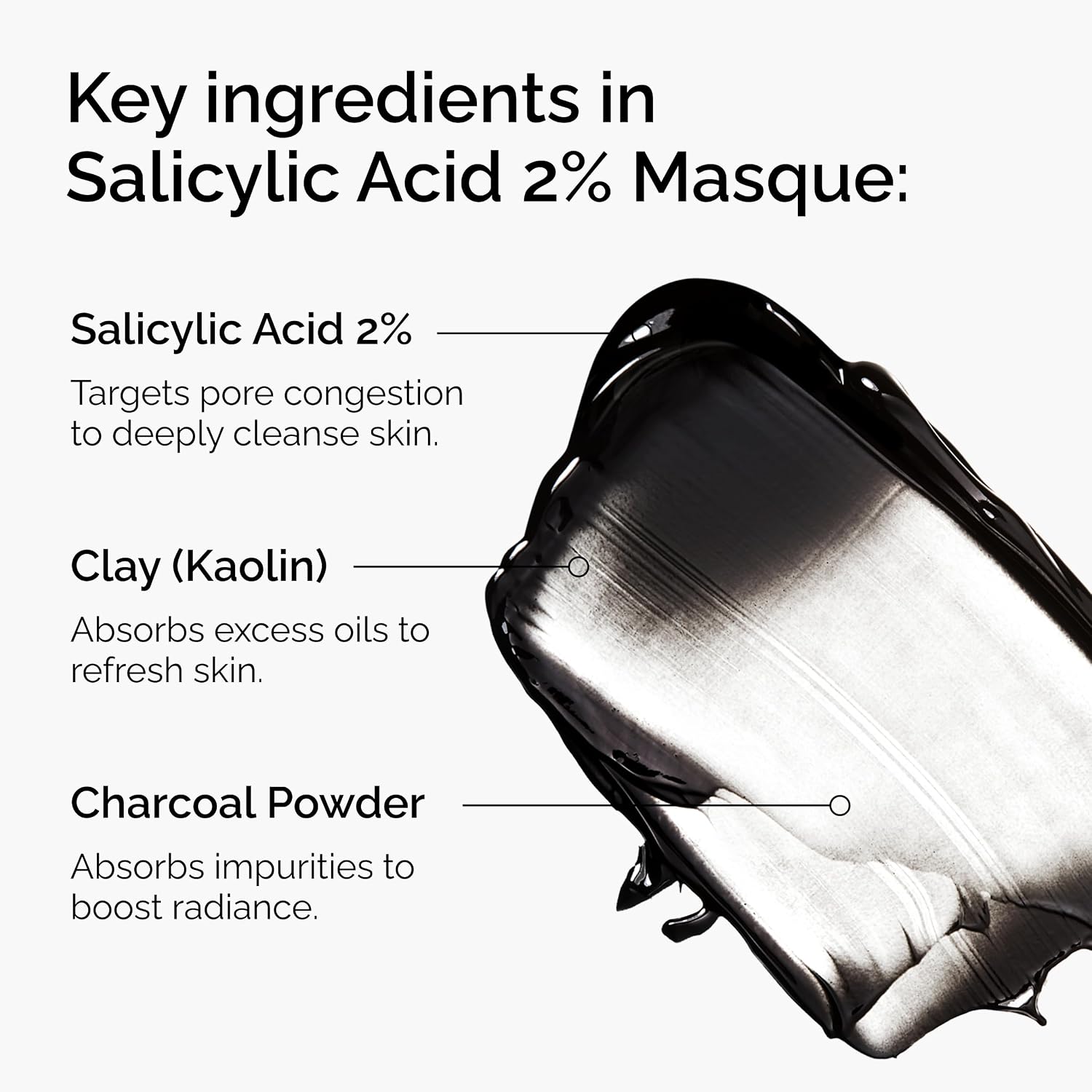
| Key active 1 | 5% Sulfur | — | Salicylic Acid 2% |
| Key active 2 | Salicylic Acid | — | — |
| Key active 3 | Austrian Peat | Fermented Rice | Charcoal |
| Clay type | — | Kaolin Clay | Clay |
| Size | 2.5 Fl Oz | 100ml | 1.7 Fl Oz |
| Target skin | Acne-prone | Blemish-prone | Blemish-prone |
| Price | $44.00 | $15.00 | $13.80 |
| See on Amazon → | See on Amazon → | See on Amazon → |
Why “Clay + Actives” Is a High-Stakes Combination
Here’s the honest framing: clay is already an astringent ingredient. Kaolin and bentonite — the two most common clays in commercially sold masks — absorb sebum (skin’s natural oil) efficiently. That’s exactly what you want when you’re dealing with clogged pores or oily zones. But sebum isn’t your enemy in total; it’s part of the barrier function. Strip it too aggressively and you trigger a rebound cycle: skin overproduces oil to compensate, pores clog again, and breakouts continue.
Add salicylic acid — which is a BHA (beta-hydroxy acid), meaning it’s oil-soluble and can penetrate into the pore lining — and you’ve significantly increased the formula’s drying potential. Add sulfur on top of that, and you’re in genuinely aggressive territory. Done right, this combination can clear stubborn cystic acne and congested pores in a way that single-ingredient approaches can’t. Done carelessly, it destroys the barrier within weeks.
Paula’s Choice Expert Advice on salicylic acid notes that the effective concentration range for acne treatment is typically 0.5% to 2%, with anything above 2% risking unnecessary irritation for most users. The concentration matters as much as the presence of the ingredient — yet most front-of-pack marketing tells you nothing about concentration.
INCIDecoder’s formulation breakdowns for popular clay mask SKUs consistently show that brands rarely disclose exact percentages for actives, relying instead on “contains salicylic acid” language. This is your first decision point: if a brand isn’t transparent about concentrations, you’re flying partially blind.
The Three Formula Archetypes (and Their Honest Tradeoffs)
Archetype 1: Clay-Only, No Actives
What it is: Kaolin, bentonite, or French green clay as the functional core. No salicylic acid. No sulfur. Sometimes with soothing additions like aloe, niacinamide, or zinc.
Who it’s for: Skin that’s reactive, barrier-compromised, or just getting started with masking. Also appropriate for regular maintenance (1–2x per week) without accumulating active load.
Representative products: Aztec Secret Indian Healing Clay ($10) is pure calcium bentonite powder you mix with apple cider vinegar or water — no actives, total transparency, extraordinary cost-per-use. OSEA Malibu Mud Mask ($58) uses sea mud with botanical calming agents. Neither is formulated to treat active acne aggressively; both are appropriate for frequent use.
The tradeoff: You won’t get the same pore-clearing speed that salicylic acid or sulfur delivers. For mild congestion and oil control, this is often the smarter long-term play. For inflammatory acne or persistent cystic breakouts, you’ll likely feel underserved.
Archetype 2: Clay + Salicylic Acid
What it is: The most common upgrade from clay-only. Salicylic acid at functional concentrations (typically 1–2%) is paired with clay to simultaneously absorb oil and dissolve pore-clogging material.
Who it’s for: Oily to combination skin dealing with blackheads, whiteheads, and mild inflammatory acne. Also appropriate for esthetician treatment rooms as a pre-extraction step — Byrdie’s coverage of professional-grade masks frequently highlights this use case.
Representative products: Glamglow Supermud ($69) combines activated charcoal and multiple acid actives including salicylic. Origins Clear Improvement Active Charcoal Mask ($30) uses white China clay with charcoal, and while it doesn’t lead with salicylic, its formulation is designed around mild chemical exfoliation principles. Freeman Feeling Beautiful Clay Mask (~$5) offers salicylic acid at the drugstore tier — formulation is basic but the active is present.
The tradeoff: Frequency matters enormously here. Allure’s dermatologist-sourced guidance on acne masks is consistent: salicylic acid masks should generally be capped at 2–3 times per week for oily skin, 1–2 times per week for combination, and used cautiously (if at all) on dry or sensitive skin. Reviewers at Byrdie consistently flag over-drying as the primary complaint with clay-plus-salicylic formulas — not ineffectiveness.
Cost-per-use consideration: A 100mL jar at $69 (Glamglow) versus a comparable-volume drugstore option at $5–10 doesn’t just represent a luxury premium — the higher-priced SKUs typically include barrier-supportive ingredients (hyaluronic acid, peptides, calming botanicals) that partially offset the drying action. Whether that offset is worth the price difference depends on your baseline skin sensitivity.
Archetype 3: Clay + Sulfur (With or Without Salicylic Acid)
What it is: Sulfur is a naturally occurring mineral with a documented history in acne treatment going back decades. It works differently from salicylic acid — it’s more antibacterial and keratolytic (meaning it helps loosen the dead skin cells that contribute to clogs) than a pure chemical exfoliant. Healthline’s overview of sulfur for skin notes that concentrations between 3% and 10% are standard in OTC treatments.
Who it’s for: Stubborn cystic acne, papules, and oily skin that hasn’t responded fully to salicylic acid alone. This is the stronger-signal formula archetype. Also frequently used in professional facial settings for clients with moderate-to-severe congestion.
Representative products: Peter Thomas Roth Therapeutic Sulfur Acne Masque (~$52) is among the most-cited options at this tier, formulated at 10% sulfur. Mario Badescu Drying Mask uses sulfur alongside calamine — a gentler approach popular with reviewers who find pure sulfur formulas too aggressive. At the prestige end, some professional-grade spa lines (including certain offerings in the Dead Sea mineral collections from Ahava and Premier in the $60–$200+ range) incorporate sulfur alongside mineral-rich mud for treatment-room protocols.
The tradeoff: Sulfur smells distinctly — there’s no way around it, and reviewers universally note it. More importantly, sulfur masks carry the highest barrier-disruption risk of the three archetypes, particularly when paired with clay and salicylic acid in the same formula. EWG’s Skin Deep database assigns low-to-moderate hazard ratings to sulfur at standard OTC concentrations, but the practical caution is straightforward: more is not more. Reviewers who experience sulfur-mask “purging” — an initial worsening of breakouts as congestion clears — sometimes mistake it for an allergic reaction. It’s worth distinguishing the two: purging typically resolves within 2–4 weeks; a true sensitization reaction worsens with each use.
By the Numbers: Frequency Guidelines by Formula Archetype
| Formula Type | Oily Skin | Combination | Dry / Sensitive |
|---|---|---|---|
| Clay only | 3–4x / week | 2–3x / week | 1–2x / week |
| Clay + salicylic acid | 2–3x / week | 1–2x / week | Use with caution |
| Clay + sulfur | 1–2x / week | 1x / week max | Avoid or spot-treat only |
| Clay + salicylic + sulfur | 1x / week | Every 10–14 days | Not recommended |
Guidelines synthesized from Paula’s Choice Expert Advice on BHA usage and Healthline’s overview of sulfur-based treatments. Individual tolerance varies; always patch-test before full-face application.
How to Read a Clay Mask Label Like a Practitioner
Most labels will list the active ingredients section separately from the full inactive (or “other”) ingredients list — this is an FDA requirement for OTC drug products, which both salicylic acid and sulfur qualify as at functional concentrations. If you see salicylic acid in the inactive or full ingredient list without an active drug facts panel, the concentration is likely below therapeutic levels and functioning primarily as a mild exfoliant or preservative.
What to look for:
- Active ingredient panel with a stated percentage (e.g., “Salicylic Acid 2%”)
- Barrier-supporting ingredients lower in the list: niacinamide, ceramides, hyaluronic acid, aloe vera, panthenol
- Absence of multiple alcohol types near the top of the list — this compounds drying action
- pH indicators on brand websites or third-party breakdowns (INCIDecoder is the most accessible tool for this) — salicylic acid works best at pH 3–4, so formulas with high pH won’t deliver the same exfoliation despite the same listed concentration
Red flags:
- Denatured alcohol (SD alcohol, alcohol denat.) in the first five ingredients alongside clay and an active acid
- No concentration disclosure for sulfur — you can’t calibrate frequency without knowing if you’re working with 3% or 10%
- “For all skin types” language on a sulfur + salicylic + clay formula — that claim is inconsistent with the combined drying profile
The Decision Rule
Here’s how to route your choice:
If your skin is oily, congested, and relatively resilient — start with clay + salicylic acid at 1–2% (Origins Clear Improvement or Freeman at the entry tier; Glamglow Supermud if you want the barrier-support upgrade). Use 2x per week, track barrier response over three weeks.
If salicylic-only isn’t moving the needle on cystic or inflammatory breakouts — step up to a sulfur formula (Peter Thomas Roth Therapeutic Sulfur at 10% is the straightforward benchmark). Drop frequency to 1x per week maximum. Do not stack with other active exfoliants the same evening.
If you’re in a treatment room sourcing for clients — the clay + sulfur archetype at professional concentrations is appropriate for oily, acne-prone clients on a controlled protocol. Document skin history before use; do not apply sulfur masks on clients using prescription retinoids or other aggressive actives without physician sign-off.
If your barrier is already showing signs of compromise — redness, tightness, flaking, increased sensitivity — pause all actives and return to clay-only or clay with calming botanicals until the barrier stabilizes. No active formula will outperform a healthy barrier when it comes to long-term acne management.
The clay mask category rewards precision over intensity. The formulas that consistently deliver results in aggregated reviews aren’t the most aggressive ones — they’re the ones matched accurately to a skin type and used at the right frequency.
Ready to compare specific SKUs side by side? Use the SkinMud comparison tool to filter clay masks by active ingredient, concentration tier, price, and skin-type rating — and cut through the checkout indecision with a direct match to your skin profile.