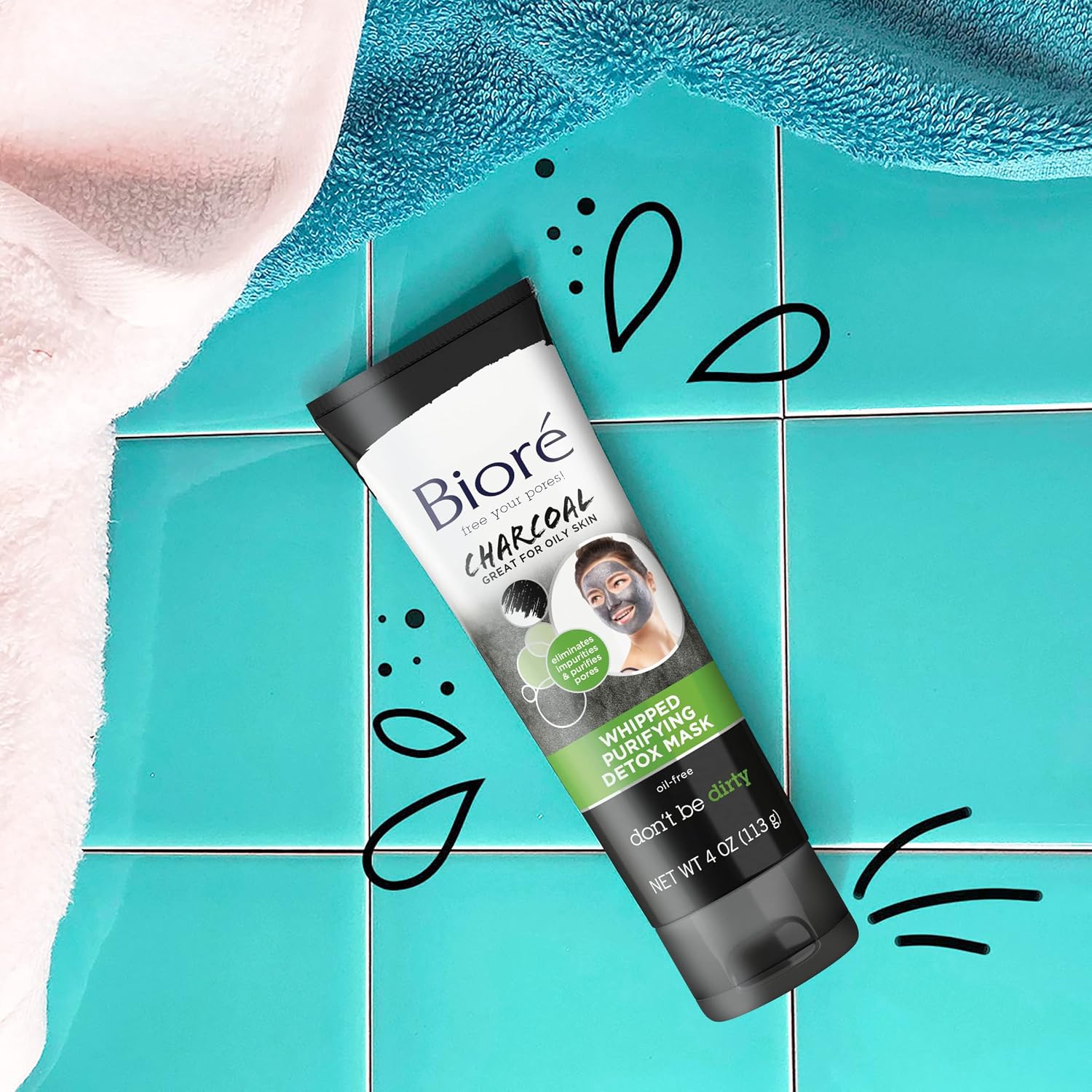
If you’ve ever stood at checkout with two charcoal clay masks in your cart and no clear reason to choose one over the other, this article is for you. A charcoal clay mask combines two well-established ingredients: clay (usually kaolin or bentonite — fine-particle minerals that physically absorb excess oil and debris from the surface of your skin) and activated charcoal (a form of carbon processed to be extremely porous, which helps draw out impurities from pores). Together they’re a go-to for oily, congested, or acne-prone skin. The catch is that “charcoal clay mask” now describes everything from a $7 drugstore tub to a $185 prestige treatment — and the formulation differences between them are real, not just marketing. By the end of this breakdown, you’ll have a clear if-X-then-Y decision rule for each of the six picks below, with the tradeoffs named explicitly so you can stop second-guessing and click buy.
| EDITOR'S PICK[Brickell Men's Purifying Charco…](https://www.amazon.com/dp/B0776X8G8D?tag=greenflower20-20) | Mid-tier[The Body Shop Charcoal Pore-Min…](https://www.amazon.com/dp/B01KSF291Y?tag=greenflower20-20) | Budget pickFreeman Polishing Charcoal & Bl… | |
|---|---|---|---|
| Size | 4 oz | 3.0 oz | 6 fl.oz |
| Key Clay | Kaolin clay | Clay-based | — |
| Additives | Hyaluronic acid | — | Black sugar |
| Scented | Unscen | — | — |
| Exfoliating | ✗ | ✓ | ✓ |
| Price | $35.00 | $29.00 | |
| See on Amazon → | See on Amazon → | See on Amazon → |
What Actually Separates a Good Charcoal Clay Mask from a Great One
Before the head-to-head, a fast framework. According to Paula’s Choice Expert Advice on how clay masks work and who should use them, the key variables aren’t the marketing claims on the front of the jar — they’re the clay type, charcoal concentration, supporting cast of actives, and how the formula is preserved and stabilized. Here’s what to read for:
Clay type matters for draw strength. Kaolin is gentler and better tolerated by sensitive or dry-combination skin. Bentonite (also called calcium bentonite or montmorillonite) swells when wet and delivers stronger absorption — which is ideal for oily or resilient skin but can strip barrier function in drier types. Some premium formulas blend both to tune the intensity. INCIDecoder’s ingredient analysis confirms that bentonite typically appears higher in INCI lists (meaning higher concentration) in drugstore picks, while prestige formulas are more likely to layer multiple clays at moderate levels to control aggression.
Activated charcoal is a supporting player, not the star. Healthline’s overview of activated charcoal for skin notes that while charcoal does have real adsorptive properties (it attracts and holds onto certain molecules), there’s no peer-reviewed evidence that it outperforms clay alone at meaningful concentrations in a rinse-off mask. Its value in formulation is real but incremental — which means a mask leaning entirely on its charcoal story and under-investing in clay quality or hydrating actives is worth scrutinizing.
The back label tells the skin-barrier story. Does the formula include humectants (hyaluronic acid, glycerin) or barrier-repairing lipids to offset the drying effect of clay? If not, you’re looking at a one-note detox mask that can overshoot on dehydration, especially if a client or customer is masking more than once a week. The Allure editorial team consistently flags this as the primary complaint in negative reviews of single-note charcoal masks.
The Six Picks, Head to Head
Tier 1 — Drugstore Entry Points
Freeman Feeling Beautiful Charcoal & Black Sugar Facial Mask (~$5) This is the entry point that gets readers into the category. It pairs kaolin clay with activated charcoal and adds black sugar as a mild physical exfoliant. Reviewers across Byrdie’s reader panels consistently describe it as reliably clarifying without the tight, stripped feeling that pure bentonite masks can cause. The tradeoff: fragrance is present and the formula is light on actives beyond the clay/charcoal pair. For a curious newcomer building a weekly ritual, that’s fine. For a practitioner sourcing for client use, the fragrance flag is worth noting — Byrdie’s editorial team and the EWG Skin Deep Database both identify synthetic fragrance as one of the more common irritancy triggers in rinse-off masks, particularly for sensitized skin.
Decision rule: If the client is new to masking, price-sensitive, and has normal-to-oily, non-sensitized skin — Freeman is a credible starter pick and a low-risk recommendation.
Aztec Secret Indian Healing Clay (~$10) This one is a single-ingredient product: 100% calcium bentonite clay. No charcoal, no fillers, no added actives. Users are instructed to mix it themselves with apple cider vinegar or water. Its cult status is earned — across aggregated reviews on Byrdie and Allure, the pattern is consistent: strong results for oily, acne-prone, or congested skin. The tradeoff is the intensity. Paula’s Choice Expert Advice explicitly cautions that bentonite-heavy masks can compromise the skin barrier if used too frequently, and Aztec Secret is about as high-concentration as it gets. For practitioners: this is a protocol tool, not a retail product — it requires a controlled application environment and a clear frequency cap (once a week maximum for most skin types, less for any compromised barrier).
Decision rule: If you have a treatment room client with stubborn congestion and resilient, oily skin — Aztec Secret is a powerful periodic treatment. Do not send this home as a daily-use recommendation.
Tier 2 — Mid-Range Cult Favorites
Origins Clear Improvement Active Charcoal Mask (~$30) Origins is where the formulation starts doing more work. The formula pairs white China clay with activated charcoal and adds lecithin (a lipid that helps prevent moisture loss) and a small amount of polyglucuronic acid. Healthline’s skincare editorial notes that barrier-supportive additions like lecithin in a clay mask signal a formulation philosophy that’s trying to clarify without stripping — which matters for daily-facing practitioners who want predictable, repeatable results on diverse skin types. Reviewers consistently flag it as a good “everyday” mask in the sense of being tolerable for twice-weekly use where a bentonite-heavy formula wouldn’t be. The scent is noticeable but lighter than drugstore options.
Decision rule: If you’re recommending a retail take-home for a client with combination or mild-oily skin who wants a simple weekly ritual — Origins is the upgrade that earns its price.
Glamglow Supermud Clearing Treatment (~$69) This is the mid-prestige standard-bearer for acne-focused charcoal masks. The INCI list is notably complex for the price point: multiple clays (kaolin plus bentonite), activated charcoal, and a blend of six acids (salicylic, glycolic, lactic, and others) in what the brand calls its “K17-Clay” and “ACNECIDIC-6” blend. INCIDecoder’s analysis of the formula confirms this is one of the denser active-ingredient stacks in the mid-price charcoal clay category. The tradeoff is predictable: that acid blend rules out Supermud for sensitized, dry, or compromised-barrier skin. Byrdie reviewers who love it tend to be oily-skin types; those with dry or reactive skin frequently report over-exfoliation. For practitioner use: this is a results-oriented treatment mask for resilient skin with active breakouts, not a general-purpose option.
Decision rule: If the client has oily, acne-prone skin and is looking for a single product doing the work of both a mask and a mild chemical exfoliant — Supermud is defensible at the price. Flag the acid load clearly before recommending it to sensitive or dry clients.
Tier 3 — Prestige and Specialty
OSEA Malibu Mud Mask (~$58) OSEA positions this differently from pure charcoal-clay masks: the hero ingredients are seaweed extracts alongside kaolin, with charcoal playing a secondary role. The brand’s sourcing narrative is centered on sustainably harvested Malibu sea kelp and Pacific seaweed. From a formulation standpoint, the mineral profile of seaweed-based ingredients can include trace iodine, magnesium, and potassium — compounds that, per EWG Skin Deep’s ingredient profiles, are generally non-irritating and potentially supportive of skin hydration. Reviewers at Byrdie consistently describe the post-mask feel as softer than traditional clay masks, which tracks with the lower bentonite concentration and higher botanical content. The tradeoff: this is not a congestion-clearing workhorse the way Aztec Secret or Supermud is. It’s a clarifying-meets-nourishing formula with a strong clean-beauty credential.
Decision rule: If the client prioritizes clean ingredient sourcing, has combination or slightly dry skin, or wants a mask that won’t require a rich moisturizer immediately after — OSEA is the easiest prestige recommendation in the lineup.
111SKIN Celestial Black Diamond Lifting Mask (~$185) This is a different product category wearing the same “mask” label. The black diamond powder and NAC Y² complex (a proprietary peptide-and-antioxidant system) are doing anti-aging and firming work that standard charcoal clay masks don’t attempt. Clay content appears lower in the INCI list; this is closer to a treatment serum in mask format. Allure’s prestige skincare coverage has consistently categorized 111SKIN as a results-focused luxury brand with formulations that are genuinely differentiated rather than merely expensive. For practitioners: the cost-per-use math only closes if you’re matching it to clients who explicitly want a lifting, firming protocol — not clients seeking pore-clearing or oil control.
By the Numbers
| Mask | Price | Primary Clay | Charcoal Role | Actives Beyond Clay | Best Skin Type |
|---|---|---|---|---|---|
| Freeman | ~$5 | Kaolin | Core | Black sugar (exfoliant) | Normal-oily |
| Aztec Secret | ~$10 | Bentonite (100%) | None | None | Oily/resilient |
| Origins | ~$30 | White China clay | Core | Lecithin, polyglucuronic acid | Combination |
| Glamglow Supermud | ~$69 | Kaolin + bentonite | Core | 6-acid blend | Oily/acne-prone |
| OSEA Malibu | ~$58 | Kaolin | Secondary | Seaweed extracts | Combination-dry |
| 111SKIN | ~$185 | Low concentration | Secondary | Peptides, diamond powder | Anti-aging focus |
Decision rule: If a client is investing in a comprehensive anti-aging treatment protocol and the mask is one step in a broader regimen — 111SKIN can be justified. If they’re primarily chasing pore clarity or oil control, redirect the budget to Supermud or Origins and invest the difference elsewhere in the routine.
The Frequency Warning Every Practitioner Should Be Giving
Across all six picks, the most consistent source of client complaints in aggregated reviews is over-masking — using clay masks more frequently than the skin barrier can recover between sessions. Paula’s Choice Expert Advice on clay mask usage recommends a maximum of twice weekly for oily skin and once weekly (or less) for combination and dry skin types. For bentonite-heavy formulas like Aztec Secret, the EWG and Healthline both support an even more conservative approach.
If you’re setting client expectations or sending a mask home as part of a retail protocol, frequency guidance isn’t optional — it’s the difference between a client who calls back saying their skin is transformed and one who calls back saying their skin is dry, tight, and broken out. The skin barrier (the outermost layer of skin that holds moisture in and irritants out) doesn’t care how premium the formula is. Over-stripping is over-stripping.
Your Checkout Decision, Simplified
Here’s the if-X-then-Y matrix to end the deadlock:
- If the skin is oily, resilient, and congested: Aztec Secret (budget) or Glamglow Supermud (mid-prestige) — maximum once weekly.
- If the skin is combination and you want a reliable take-home retail rec: Origins Clear Improvement. Easy to use, forgiving, well-priced for the formulation.
- If the client prioritizes clean sourcing and has combination-to-dry skin: OSEA Malibu. The seaweed-forward formula closes the gap between clarifying and nourishing.
- If the goal is firming and anti-aging alongside mild detox: 111SKIN. But match the client profile carefully — this isn’t a pore mask.
- If the client is brand new to masking: Freeman is a low-risk on-ramp. Just flag the fragrance for anyone with a history of sensitivity.
Ready to run a side-by-side cost-per-use comparison for your specific purchase volume? Head to our [comparison tool] to model the per-treatment cost across single jars and multi-unit orders — or browse the full lineup of top-rated charcoal clay masks to shop the winners directly.